How an AI agent tracks your projects every week
What an AI agent needs to track your projects, what gets adjusted in each company, and the findings that surface after a few weeks.
Juan Miguel Jiménez P. · September 1, 2026 · 6 min read

Monday morning. You ask your ten project leads for a status update, one by one. On Wednesday you ask again, because the answers came back half done. On Thursday you walk into the steering committee with three projects fully reported and seven with gaps. Sound familiar?
A project management office (PMO) usually breaks down in the boring part, which is chasing people, and the first task to get dropped is precisely the one that has to be repeated, unchanged, every single week.
This article is for the company that is getting started with AI and wants a first process with a visible result. It is also for the company whose AI projects aren't delivering results because it started with something too big.
Project tracking is one of the best processes to start with
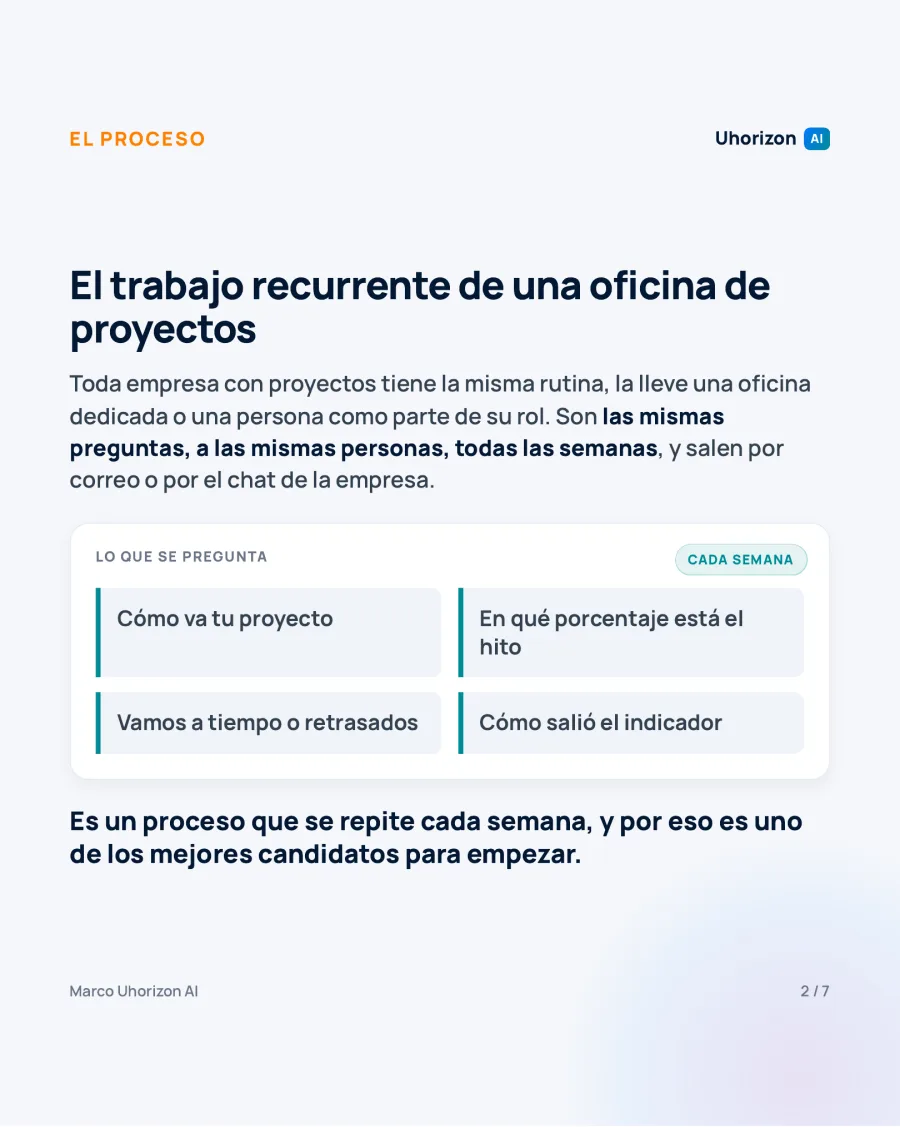
Every company that runs projects has the same routine, whether a dedicated PMO owns it or someone handles it as part of their job: asking how each project is going, what percentage of this month's milestone is done, whether we're on schedule and how the KPI came out. Same questions, same people, every week, sent by email or over the company chat.
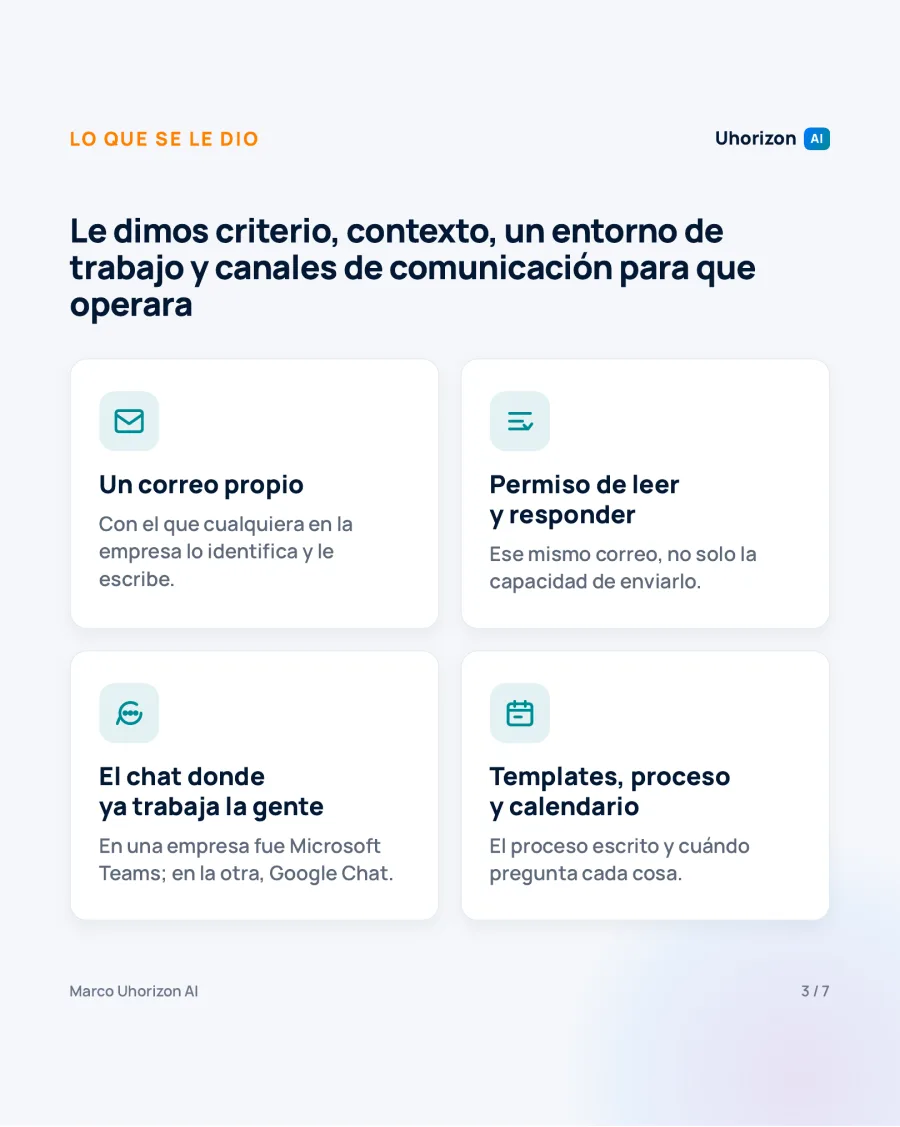
That is why it was the first agent we put into real operation, and today it runs in two companies. To get it operating, we gave it four things:
- Its own email address, so anyone in the company can recognize it and write to it.
- Permission to read and reply from that inbox, not only to send.
- The chat where people already work. In one company that was Microsoft Teams, and in the other, Google Chat.
- The templates, the written process and the calendar that says when it asks for what.
What gets adjusted in each company is the way it works
The agent comes already built and tested. Three things changed from one company to the other:
- The project one-pager. Each company needs more or less information depending on the nature of its projects, so some fields come out and others go in.
- The criteria for saying a project is on track. In one, progress and impact are enough. The other has risk controls, and the bar is stricter.
- How much weight prioritization carries. In one company, deciding which project not to do matters more than tracking all of them, and the agent has to help with that decision.
Over time, the PMO itself matures. In the first months it asks for progress and dates, and the agent asks, sorts the answers and builds the weekly report. When the portfolio grows, dependencies and risks between projects show up, and the agent needs to flag them early so a milestone doesn't slip. And when leadership has to make decisions, knowing the status is no longer enough: you have to prioritize what goes in, what waits and what stops. Our tracking agent, which we call Solar-PMO, follows that path and adapts to what each stage asks for.
After a few weeks, three findings show up that nobody pulls together by hand
When we set up the agent, we expected to save the work of collecting status updates. That happened, and it turned out to be the least interesting part. The real value showed up once the agent had several weeks stored and could compare them. These are the three findings, with sample data:
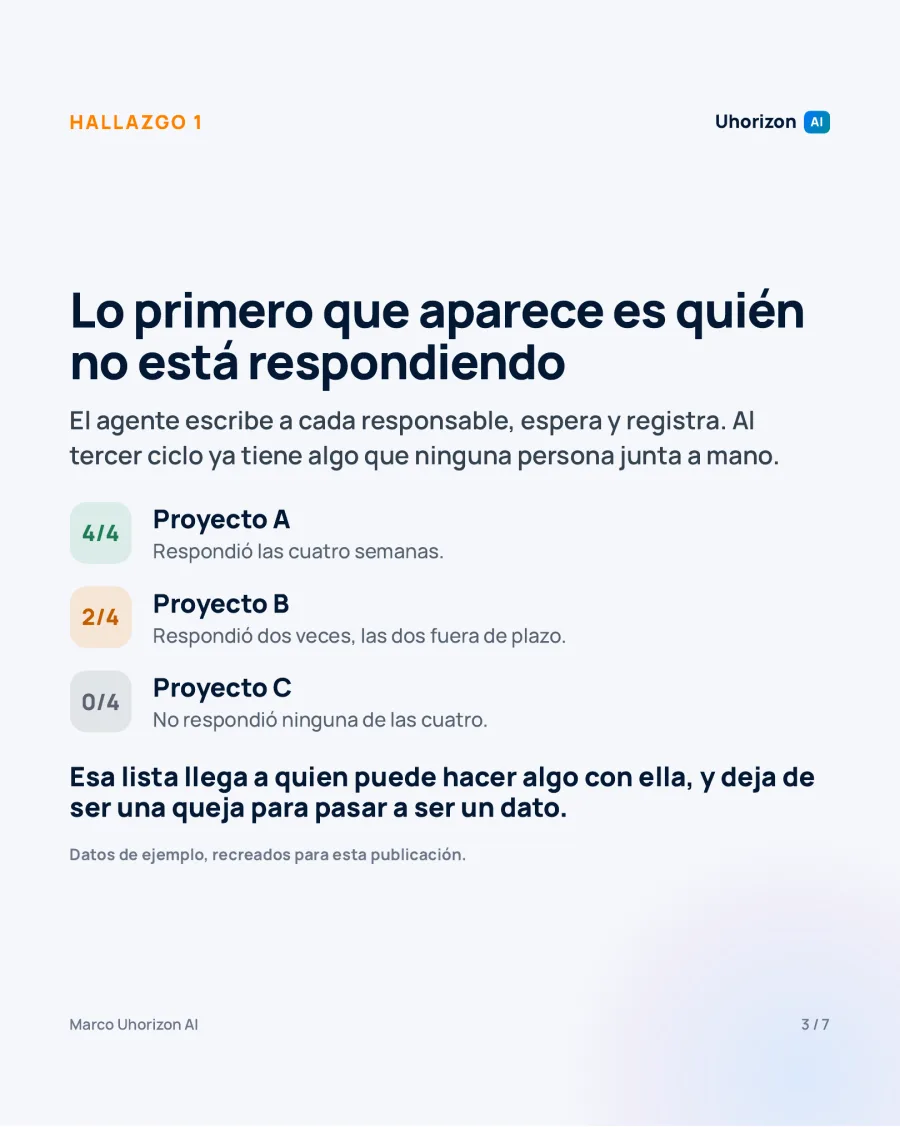
- Who isn't responding. The agent writes to each project lead, waits and logs the result. By the fourth cycle it already knows that project A answered all four weeks, project B answered twice and late, and project C never answered. Beyond showing it, the agent follows up, escalates to the lead's manager or the next owner up and, if needed, to the head of the PMO. That list reaches someone who can act on it, and it stops being a complaint and becomes a data point.
- The milestone that keeps moving. In week 1 the milestone closes on May 15. In week 3 it moves to May 30, waiting on a vendor. In week 6 it moves to June 20, waiting on the same vendor. A date that slips doesn't catch anyone's attention, because there is always a reasonable explanation; the third time, you only notice if someone kept the two before it. The agent shows the pattern without judging the reason, and that conversation can happen in time.
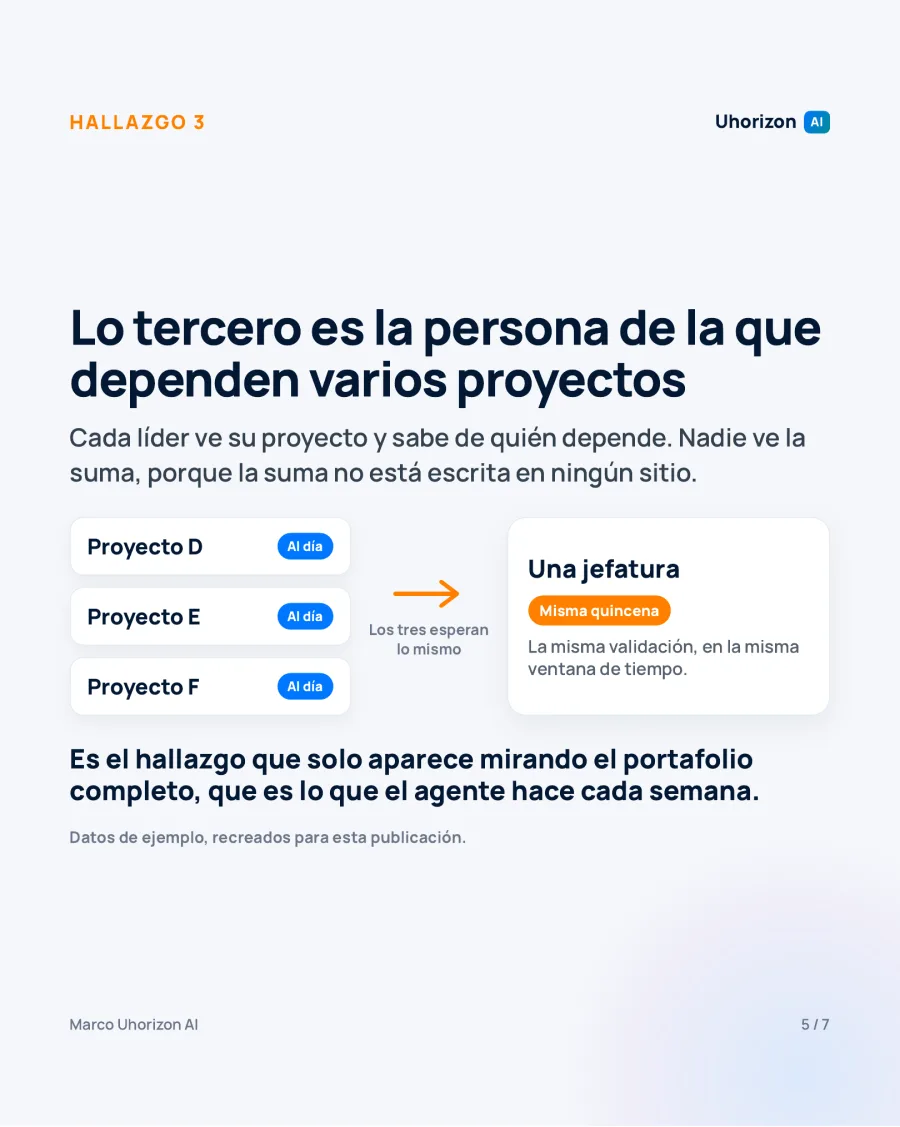
- The person several projects depend on. Three projects are waiting on the same sign-off from the same manager, in the same two weeks. Each project lead sees their own project and nobody sees the total, because the total isn't written down anywhere. None of them is late yet, and all three will be if that sign-off doesn't come through in time.
That changes the steering committee. The meeting stops being spent on gathering information, because the status arrives consolidated before it starts. People discuss what moved. And priority decisions come with evidence, because who is holding up whom is laid out in a table. None of those changes requires switching tools.
Before starting, the company defines four things
- Who owns the PMO and what the agent reports.
- Who the agent writes to for each project update.
- What happens when something changes that was already agreed, which is the same change control as always.
- Who approves running the follow-up this way, with the sponsor and the committee you already have.
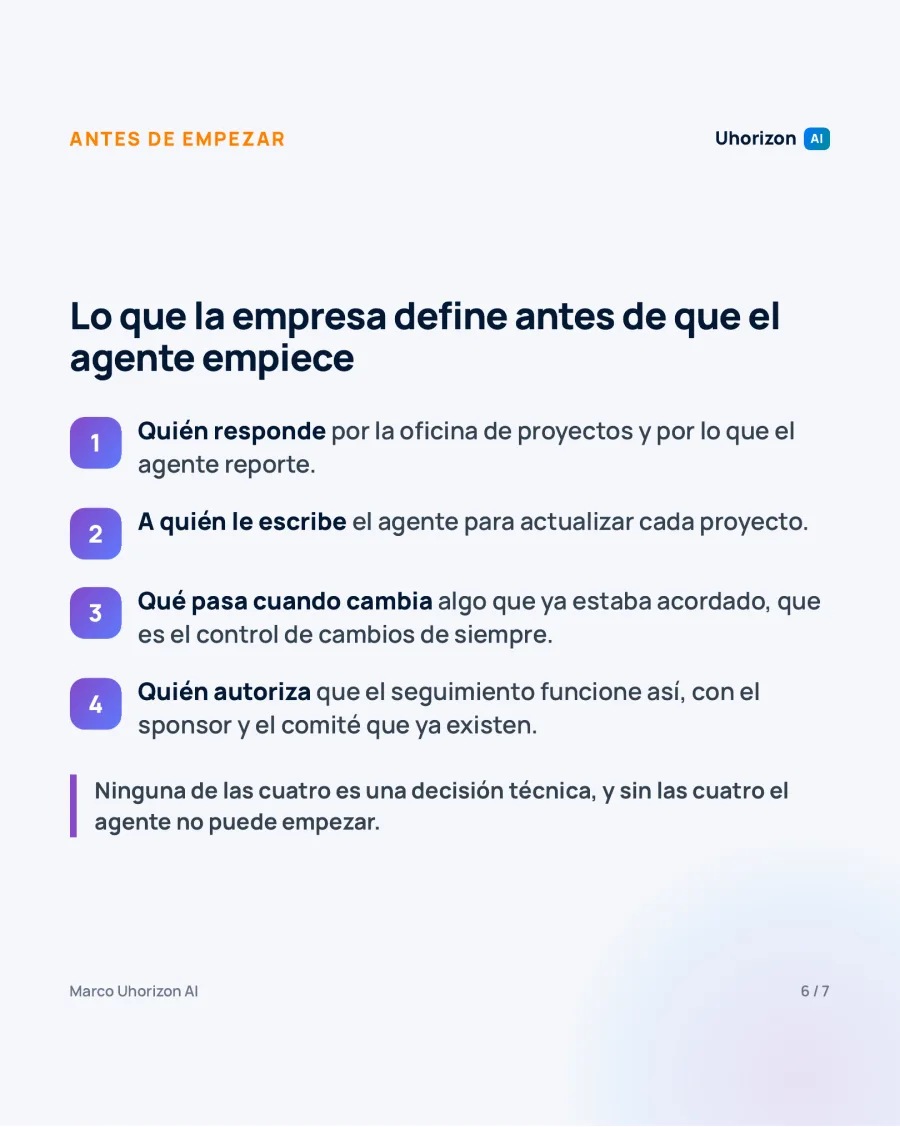
None of the four is a technical decision, and without all four the agent can't start. It's like hiring a new project coordinator: before their first day, someone has to tell them who they report to, who they ask for information and who signs off on changes.
On Monday you can have that groundwork ready. Write down the list of active projects with their owners, the day of the steering committee and the four definitions above. That covers what your company puts in once, and the agent brings the rest.
Back to that Thursday committee with seven projects full of gaps: what changes is walking into that meeting with the full status and the three findings on the table. If you'd like to see it on your own projects, let's talk for 30 minutes and walk through it on your operation.